Kuba im Mai 2015. Invasion der Amerikaner! Kaum haben die USA die Handelssanktionen gegen Kuba im Frühjahr gelockert, wurden die stadtbekannten Nachrichtenportale mit solcherlei Schlagzeilen geflutet. Offensichtlich schnürt so ein historischer Moment nicht nur Freuden, sondern auch Ängste. Und schaut man sich an, was die Mechanismen des globalen Wirtschaftswahnsinns mit den schönen Flecken unserer Erde üblicherweise anstellen, dann werden die Wurzeln dieser Ängste relativ schnell sichtbar und verständlich. Übersetzt heissen Lockerungen von Sanktionen am Ende des Tages auch nichts anderes als die Erhöhung von Investitionen. In Urlaubsgebieten wie Kuba fliessen die Dollarinos dann wohl hauptsächlich in neue Hotels, Geschäfte, Konsumgüter. Darauf stehen wir Individualreisenden so ganz und gar nicht und suchen immer verzweifelter nach unberührten Reisezielen. Die Welt wird immer kleiner und enger. Immer mehr Menschen können sich das Reisen leisten, was Touristenzahlen exorbitant steigen lässt. Einst wertvolle Geheimtipps, deren Anreise eine gewisse Abenteuerlust verlangte, schmücken heute die Titelblätter der Reisemagazine und sind entspannt mit Direktflug und Shuttlebus zu erreichen. Kuba ist zwar längst kein Geheimtipp mehr, aber der zeitliche Stillstand der Insel seit der Kubakrise war bisher ein Garant für eine stabile Unveränderung des Landes. Und so rutschte es in der „Places-to-visit-List” nur langsam die Rangliste herauf. Das scheint sich nun wohl schlagartig zu ändern. Oder doch nicht?
Kommunismus in Kuba
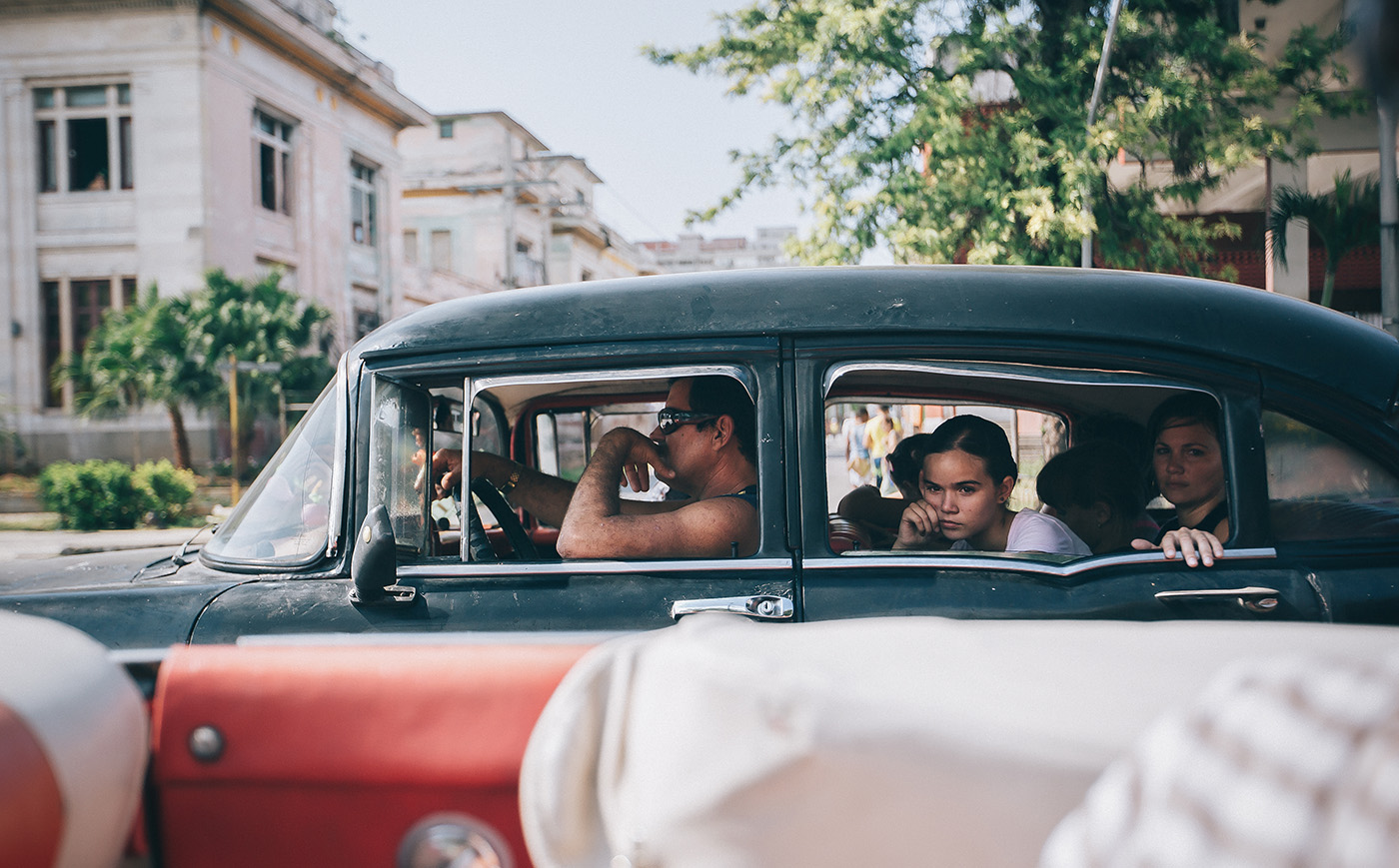
Die Befürchtung, Kubas Städte und Küsten würden innerhalb kürzester Zeit vom letzten Schrei westlicher Konsum- und Erholungsstandards überschwemmt werden, hat sich bei mir persönlich nicht bestätigt. Nach meiner dreiwöchigen Reise quer durch die gesamte Insel habe ich persönlich das Gefühl, dass sich das Gesicht Kubas zwar ändern wird, dies jedoch nur sehr langsam geschehen wird. Es gibt einfach wahnsinnig viel zu tun. Infrastrukturell wie technologisch befindet sich das Land noch in den 60ern. Wer daran schnell etwas ändern will, der wird einen langen Atem brauchen – und ein wenig Kleingeld. Ich denke auch, dass sich Veränderungen vor allem auf die Hauptstadt Havanna und die wenigen Badegebiete wie Varadero und Cayo Coco konzentrieren werden. Viele andere Teile der Insel sind bisher sehr schlecht bis gar nicht ausgebaut oder erreichbar. Obwohl Kuba mitten in der Karibik liegt, bietet es relativ wenige Strandzugänge zum Meer. Ausserdem wäre da noch die nicht unwichtige Randnotiz mit dem Kommunismus. Der Kontrollapparat um Herrn Castro wird sich das Zepter der Macht nach Jahrzehnten der Kontrolle eher ungern aus der Hand nehmen lassen. Der Kommunismus auf Kuba ist in der Tat offensichtlich und stark zu spüren. Die Polizei ist allgegenwärtig und kontrolliert regelmässig die Inselbewohner. Auch die Wirtschaft wird vom strengen Arm des Staates geführt. Auf meinem Weg mit dem Mietwagen von Havanna nach Viñales, der Region der Tabakplantagen, habe ich drei gestrandete Kubaner mitgenommen. Ihr knapp 60 Jahre alter Chevy hatte mal wieder den Geist aufgegeben. Als Dankeschön für die fast einstündige Mitfahrgelegenheit haben sie mich am Folgetag auf ihre Tabakplantage eingeladen. Zur Privatvorführung, ganz ohne Touristen. Dort wurde mir der ganze Produktionsprozess vorgestellt und erklärt. Sehr spannend. Bei einer gediegenen Cohiba haben wir irgendwann auch über die wirtschaftliche Situation gesprochen. 85 % der Erträge der Felder muss die Plantage an den Staat abdrücken. Und das, obwohl der Staat die wirtschaftlichen Fesseln vor Kurzem scheinbar etwas gelockert hat. Der Inhaber der Plantage sagte mir, dass jede Woche ein Kontrolleur des Staates unangemeldet zu Besuch kommt und alle Tabakpflanzen peinlich genau nachzählt, um daraus die Anzahl der produzierbaren Zigarren zu errechnen. Somit sollen Tricksereien bzw. das Wirtschaften in die eigene Tasche unterbunden werden. Das sei auch einer der Gründe, wieso in Kuba niemand wirklich reich ist. Schlussendlich landen die grossen Erträge auf staatlichen Konten.
Vorsicht Schlagloch
Kuba hat zum Glück auch viele schöne und noch mehr amüsante Seiten. Zum einen wäre das die bunte Küche, die jeden verdammten Tag aus trockenem Reis, trockenem Fleisch/Fisch und ein paar Scheiben Gurken und Tomaten besteht. Sossen, Dressings oder Gewürze sind den Kubanern wohl nicht geheuer. Moderner Übersee-Schnickschnack. Zum anderen wäre da noch die Sache mit den Verkehrsstrassen. Wobei Strassen grundsätzlich ein mutiger Begriff ist. Vor allem die des tropischen Ostens der Insel rund um Baracoa sind, gelinde gesagt, ausbaufähig. Im Reiseführer wurde die Strecke von Baracoa zurück in den mittleren Teil der Insel zwar als wirklich schön und sehenswert, aber auch als weniger gut befahrbar beschrieben. Im Nachhinein stelle ich mir die Frage, womit „weniger gut” in Relation gesetzt wurde. Denn grundsätzlich ist keine der Strassen in Kuba gut befahrbar. Jedenfalls haben wir mit dieser 150 km langen Strecke wohl den absoluten Schlagloch-Jackpot geknackt. Schlappe fünf Stunden haben wir für diesen Zwischenspurt gebraucht. Im gemütlichen Durchschnittstempo von teils 2 km/h ging es dabei von einem Schlagloch ins andere. Ich habe grundsätzlich die volle Breite der Fahrbahn nutzen müssen, um nicht das Auto irgendwo für immer zu versenken. Besonders amüsant waren Brücken, deren Aussichtslöcher im Betonboden einen grossartigen Blick auf vorbeiziehende Flüsse boten. Wir waren übrigens die einzigen Bekloppten, die sich diese Route angetan haben. Die staunenden Gesichter und offenen Kinnladen der Kubaner, die ab und wann am Strassenrand des Dschungels standen, werde ich wohl nicht mehr vergessen. Das Auto war nach den drei Wochen ein rollender Schrotthaufen. So viele Erschütterungen und Schläge hält der stärkste Renault nicht aus. Kleiner Tipp für Reisende mit Mietwagen: Kurz vor Abgabe des Flitzers am Flughafen aussteigen und alle Stossstangen und Bleche zurück an ihre ursprüngliche Position klopfen. Dann funktioniert die Rückgabe beschwerdefrei.
Cuba, May 2015. American invasion! No sooner had the USA loosened trade sanctions against Cuba in the spring than the well-known news portals were flooded with headlines like these. Apparently, a historic moment like this doesn’t just bring joy but also fear. And when you look at what the mechanisms of global economic madness typically do to the beautiful spots on our planet, the roots of those fears become visible and understandable pretty quickly. At the end of the day, loosening sanctions really just means increasing investments. In vacation destinations like Cuba, those dollars then flow mainly into new hotels, shops, and consumer goods. That’s something we independent travelers absolutely despise, and we search ever more desperately for untouched destinations. The world keeps getting smaller and tighter. More and more people can afford to travel, causing tourist numbers to skyrocket. Once-valuable insider tips, whose journey required a certain sense of adventure, now adorn the covers of travel magazines and can be reached comfortably via direct flights and shuttle buses. Cuba has long ceased to be an insider tip, but the island’s standstill in time since the Cuban Missile Crisis had been a guarantee of the country’s stable unchangingness. And so it only slowly climbed the “places to visit” list. That seems to be changing abruptly now. Or is it?
Communism in Cuba
The fear that Cuba’s cities and coasts would be flooded with the latest in Western consumer and leisure standards in no time did not materialize for me personally. After my three-week trip across the entire island, I personally feel that Cuba’s face will change, but only very slowly. There’s simply an insane amount of work to do. In terms of infrastructure and technology, the country is still in the 1960s. Anyone wanting to change that quickly will need a lot of patience – and a bit of pocket change. I also think that changes will mainly concentrate on the capital Havana and the few beach areas like Varadero and Cayo Coco. Many other parts of the island are very poorly developed or not accessible at all. Although Cuba sits right in the middle of the Caribbean, it offers relatively few beach accesses to the sea. Plus, there’s the not-unimportant side note about communism. The control apparatus around Mr. Castro will be rather reluctant to hand over the scepter of power after decades of control. Communism in Cuba is indeed obvious and strongly felt. The police are omnipresent and regularly check on the island’s residents. The economy is also run by the state’s firm hand. On my way by rental car from Havana to Viñales, the region of tobacco plantations, I picked up three stranded Cubans. Their roughly 60-year-old Chevy had once again given up the ghost. As a thank you for the almost one-hour ride, they invited me to their tobacco plantation the following day. A private tour, no tourists whatsoever. There, the entire production process was presented and explained to me. Very fascinating. Over a refined Cohiba, we eventually also talked about the economic situation. The plantation has to hand over 85% of its field yields to the state. And that despite the state apparently having loosened its economic shackles a bit recently. The plantation owner told me that every week, a state inspector shows up unannounced and meticulously counts every single tobacco plant to calculate the number of cigars that can be produced. This is meant to prevent cheating and pocketing profits. That’s also one of the reasons why nobody in Cuba is really rich. Ultimately, the big profits end up in government accounts.
Watch Out for Potholes
Fortunately, Cuba also has many beautiful and even more amusing sides. For one, there’s the colorful cuisine, which every damn day consists of dry rice, dry meat/fish, and a few slices of cucumber and tomato. Sauces, dressings, or spices are apparently met with deep suspicion. Fancy foreign nonsense. Then there’s the matter of the roads. Though “roads” is a bold term to begin with. Especially those in the tropical east of the island around Baracoa are, to put it mildly, in need of improvement. The travel guide described the route from Baracoa back to the central part of the island as really beautiful and worth seeing, but also as less than ideally drivable. In hindsight, I wonder what “less than ideal” was being compared to. Because fundamentally, none of the roads in Cuba are well drivable. In any case, with this 150-kilometer stretch, we hit the absolute pothole jackpot. A mere five hours is what we needed for this sprint. At a leisurely average speed of sometimes 2 km/h, we went from one pothole to the next. I basically had to use the full width of the road to avoid sinking the car somewhere forever. Particularly amusing were bridges whose viewing holes in the concrete floor offered a magnificent view of passing rivers below. We were, by the way, the only fools who subjected ourselves to this route. The astonished faces and dropped jaws of the Cubans who occasionally stood at the jungle roadside – I’ll probably never forget those. The car was a rolling pile of scrap after those three weeks. Not even the toughest Renault can handle that many shocks and blows. A little tip for travelers with rental cars: shortly before returning your speed machine at the airport, get out and knock all the bumpers and panels back into their original positions. Then the return goes smoothly, no complaints.