Mercedes 814DA Conversion: From Fire Truck to Campervan
Converting a Mercedes 814 DA from fire truck to round-the-world camper. I built myself my dream overland vehicle. But the road to the finished rig was rocky and long, and took almost seven years. Now it's done, and my biggest adventure yet is beginning: down the Pan-American Highway from Canada to Patagonia.
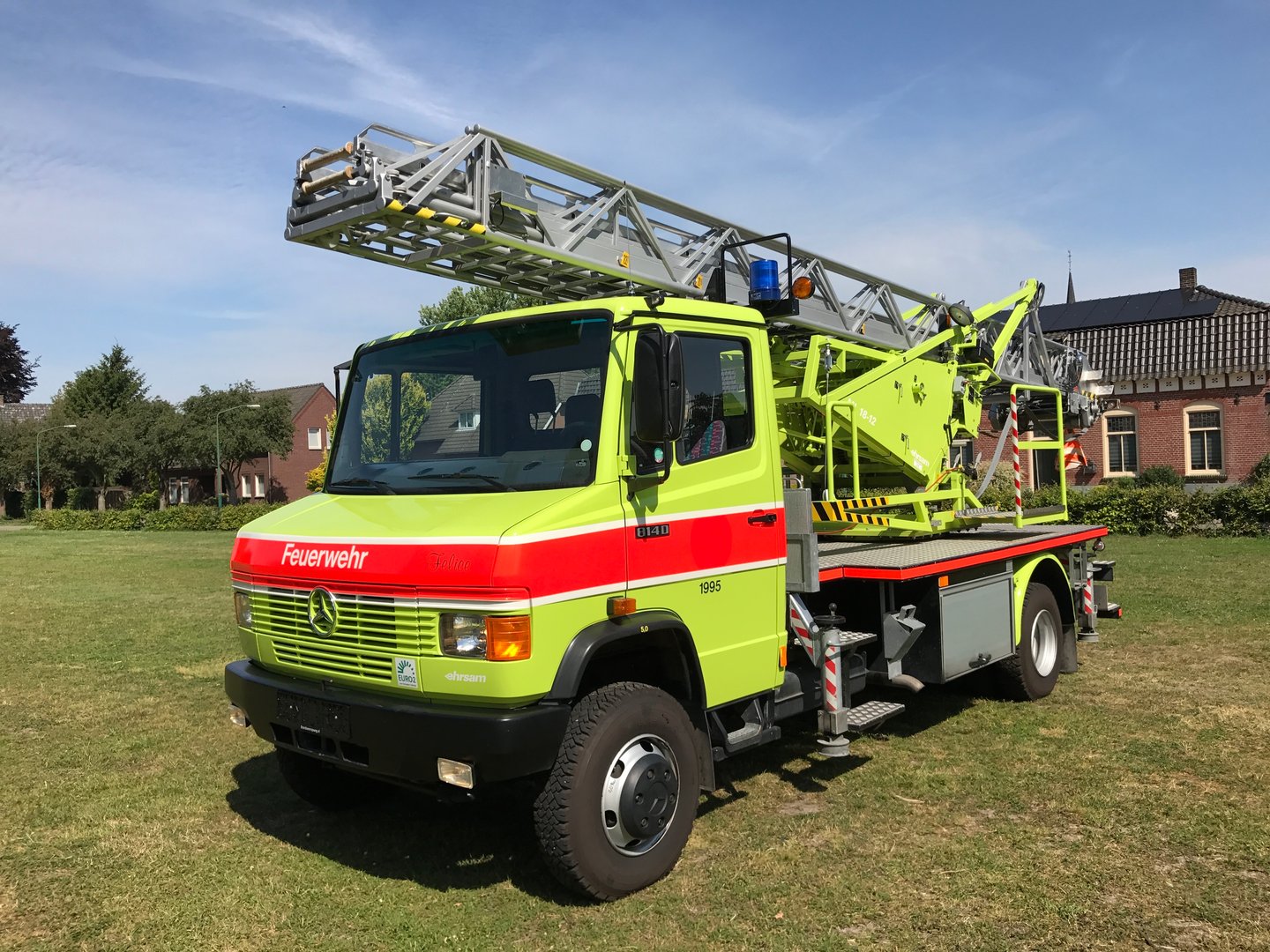
Sechs Jahre und acht Monate. So lang hat es zwischen dem Kauf meines Mercedes 814 DA und der ersten Fahrt durch Kanada gedauert. Der Umbau vom Schweizer Feuerwehrauto zum Expeditionsmobil hat alles gekostet, was ich an Naivität hatte und noch ein bisschen mehr. 2018 bin ich gerade von meiner sechsmonatigen Backpacking-Reise aus Südamerika zurückgekehrt. Geküsst von der Schönheit dieser Welt wusste ich direkt bei meiner Heimkehr, dass diese Reise erst der Anfang gewesen sein muss. Also habe ich mir eine alte Schweizer Feuerwehr von 1994 gekauft. Das Ziel war es in 2-3 Jahren das Fahrzeug in einen Camper umzubauen und damit dann von Canada nach Patagonien zu fahren. Natürlich.
Warum ein Feuerwehrauto als Basis für ein Expeditionsmobil
Die Wahl eines Oldtimers macht auf den ersten Blick vielleicht wenig Sinn, gibt es doch tolle moderne Fahrzeuge wie den Sprinter, Iveco oder MAN. Sie sind deutlich sparsamer, flotter unterwegs, komfortabler und deutlich sicherer. Doch sie sind mittlerweile auch rollende Computersysteme, die randvoll mit Elektronik, Assistenten und Software vollgepackt sind. Das kann bei Reisen in weit entfernten Ländern mit eingeschränkter Werkstatt-Infrastruktur durchaus problematisch werden. Bleibt man mit so einem modernen Fahrzeug liegen, kann einem meistens erstmal nur ein Computerfachmann weiterhelfen.
Der Mercedes 814 DA hat all diese schönen Spielereien nicht. Es ist der letzte “kleine LKW” von Mercedes, der über keinerlei Elektronik verfügt. Er ist zwar laut, langsam und nicht sonderlich sparsam, was den Sprit angeht. Dafür ist er sehr robust gebaut und lässt sich deutlich einfacher reparieren. In vielen Ländern dieser Welt (jedenfalls dahin, wo ich fahren will) fahren noch deutlich mehr alte Fahrzeuge als neue durch die Gegend. Dementsprechend sind die Mechaniker erfahrener mit “einfachen” Fahrzeugen als mit den neuesten Modellen.
Warum ehemalige Feuerwehrfahrzeuge ideal sind
Feuerwehrfahrzeuge haben noch einen zweiten Vorteil. Sie sind in der Regel pfleglich gewartet und haben wenige Kilometer auf dem Tacho. Mein 814 DA namens “Felice” hatte beim Kauf erst 9.800 km auf dem Buckel. Und das nach damals knapp 30 Jahren. Ich bin in der Zeit wahrscheinlich mehr zu Fuss gegangen, als Felice gefahren ist.
Die wichtigsten Entscheidungen beim 814 DA Umbau
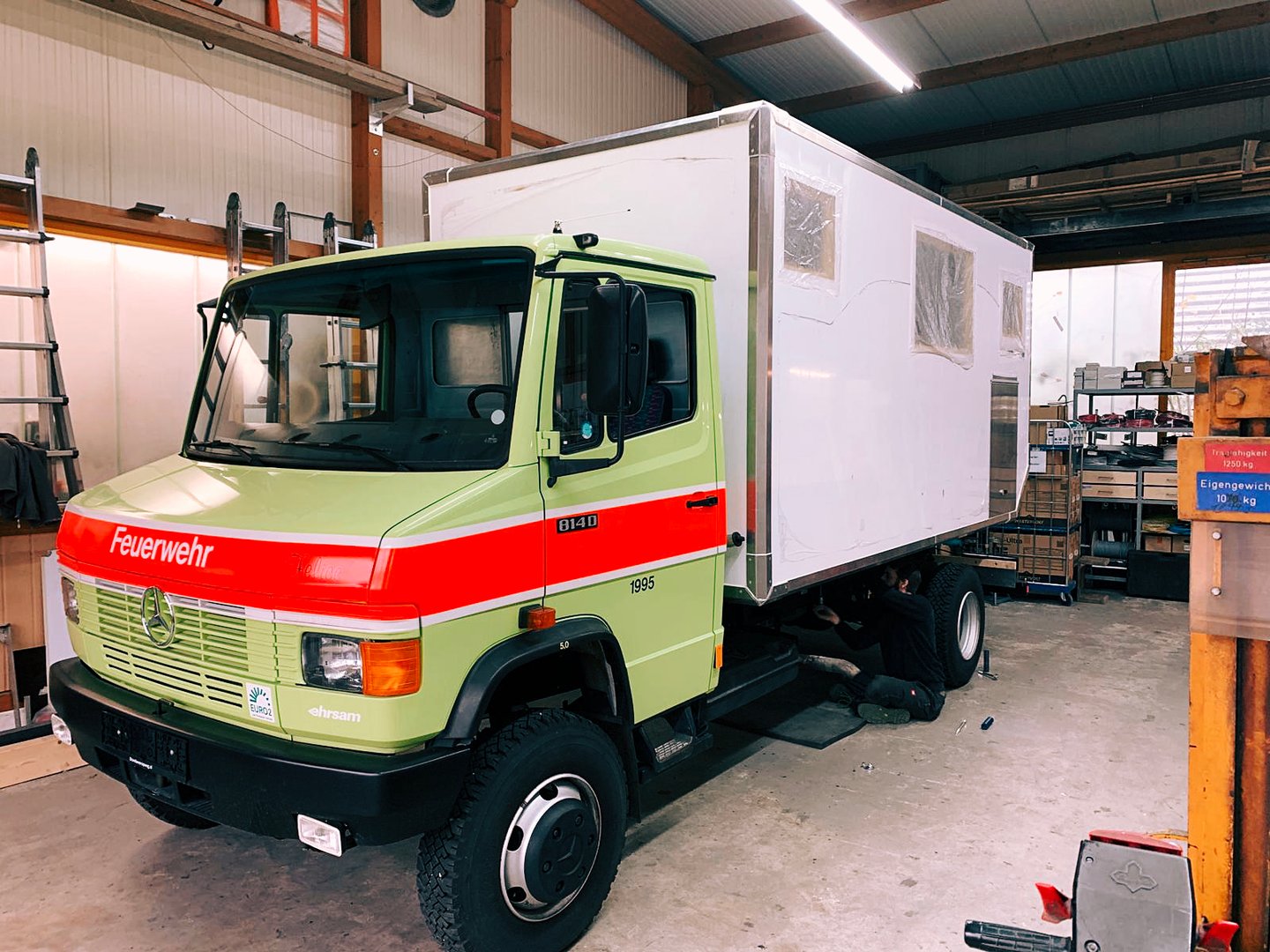
Die Zwischenrahmen-Lagerung. Die Aluminium-Wohnkabine muss federn und sich gegen das Fahrerhaus verwinden können, sonst kann der Rahmen oder die Kabine reissen. Meine Wohnkabine ist dreipunktgelagert, was sich bisher gut bewährt hat.
Die Isolierung. Je nachdem, wohin man reisen möchte, ist die Dicke der Isolierung wichtig. In meinem Fall galt: lieber zu dick als zu dünn. Ich brauche ein Allround-Fahrzeug. Eines, das mit Kälte und Wärme klarkommt. In Patagonien wird es kalt. In Mexiko heiss. Beides muss das Allrad-Wohnmobil können.
Die Wassertanks. Gross genug für zwei Wochen autark. Wer an einer schönen Bucht, weit weg von jeglicher Zivilisation steht, möchte nicht nach zwei Tagen wegfahren müssen, weil das Wasser leer ist. Ich habe rund 230 Liter Frischwasser an Bord und einen 80-Liter-Abwassertank. Mein Wasserfiltersystem besteht aus zwei Kohlefiltern und zwei Keramikfiltern von Famous Water. Damit kann ich aus fast jeder Pfütze Trinkwasser zaubern. Inklusive köstlichem Eigengeschmack.
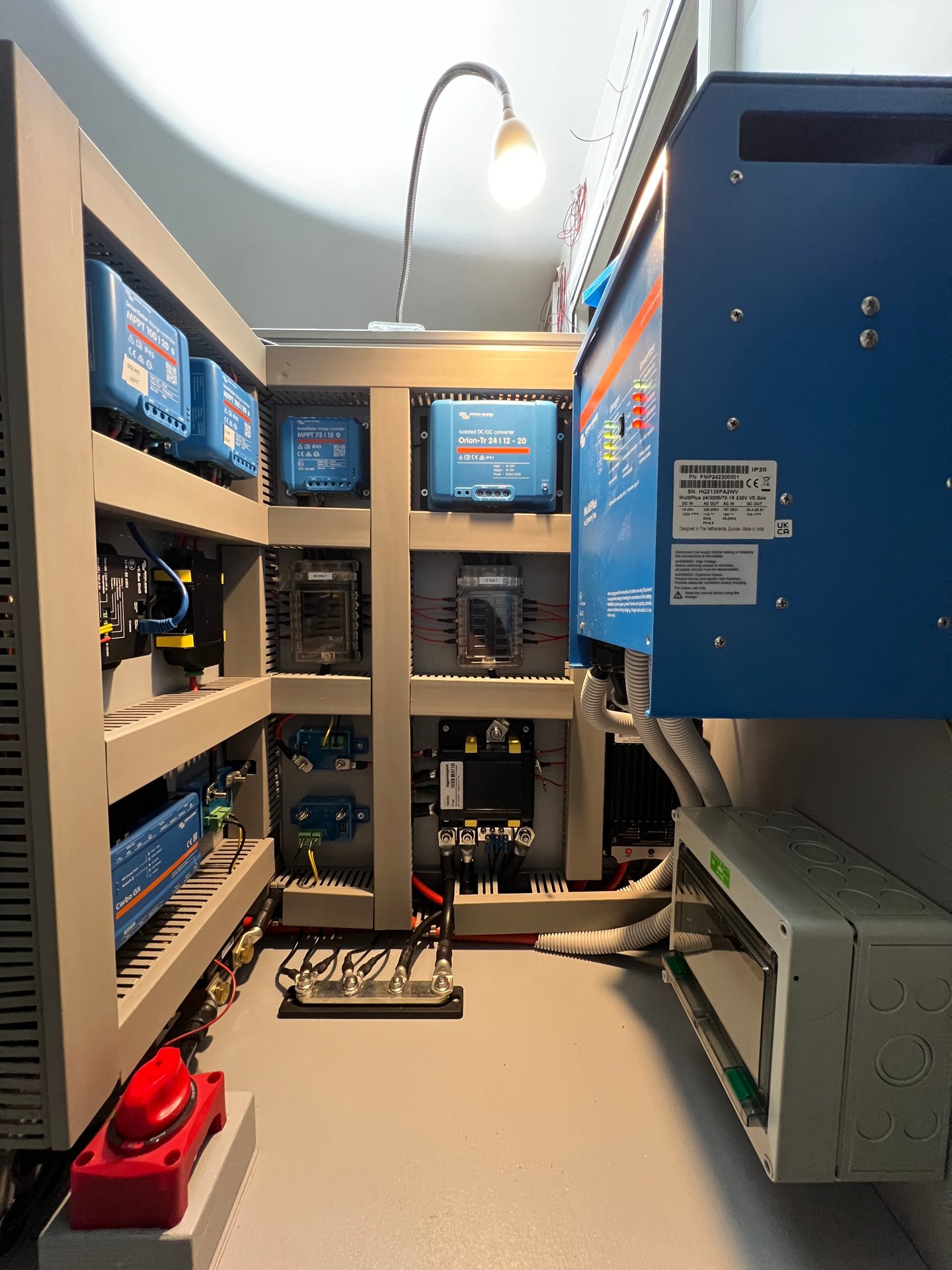
Genügend Strom. Mir war Gas schon immer unheimlich. Ausserdem habe ich keine Lust, mich mit Gasflaschen und den unzähligen Anschlüssen auf dieser Welt rumzuärgern. Deswegen koche ich in der Kabine mit Strom (Induktion). Das zieht natürlich entsprechend viel Strom, was ein grosses Elektrosystem zur Pflicht macht. Mein System im Überblick:
- Bordnetz: 24V (mit 12V-Wandler für Kleinverbraucher)
- Wechselrichter: 230V / 3 kW für Induktion
- Solar: 6 Panele, 960 Wp gesamt (2x Reihenschaltung)
- Batterie: 400 Ah Lithium-Ionen
- Lichtmaschine: 100A, lädt während der Fahrt zusätzlich
Arbeiten am Fahrzeug. Am LKW selbst wurde nur relativ wenig optimiert. Die alte Feuerwehr ist in einem ausgezeichneten Zustand. Keinerlei Rost, von der Schweizer Feuerwehr bestens gepflegt. Als ich nach knapp sieben Jahren nach der Abmeldung das erste Mal zur TÜV-Inspektion musste, ist der mittlerweile 33 Jahre alte Mercedes 814 DA direkt, ohne jegliche Beanstandung, durchgekommen. Was ich aus eigenem Antrieb optimiert habe: unter anderem die Dieselpumpe. Sie wurde vom Bosch-Pumpenspezialisten komplett revidiert und neu eingestellt. Das hat satte 30 PS Mehrleistung gebracht. Ausserdem sind nun moderne Marquardt-Stossdämpfer verbaut. Damit ist der LKW deutlich straffer auf der Strasse und wackelt nicht mehr so im Wind. Die originalen Mercedes-Felgen wurden gegen 19,5-Zoll-Gabo-Felgen ausgetauscht.
Fast sieben Jahre Umbau im Detail
Jedes Detail hat eine unendliche Tiefe
Das Wichtigste, was ich bei diesem Projekt gelernt habe: Plane das Doppelte an Zeit ein. Wirklich. Jedes Detail hat eine unendliche Tiefe. Du willst eine Steckdose an der Wand. Schön. Dann brauchst du ein Kabel, einen Sicherungsautomaten, einen Wechselrichter, eine Batterie, einen Laderegler, ein Solarpanel auf dem Dach usw. Jeder Schritt zieht zehn neue nach sich. Und von jedem Bauteil gibt es natürlich unzählige Hersteller, die alle das beste Produkt haben. Da durchzusteigen ist recht komplex. Vor allem, wenn man so ein Techniknerd wie ich ist und alles verstehen muss. Allein für die Recherche und das Design des Fahrzeugs und des Innenausbaus ging unendlich viel Zeit ins Land. Der Vorteil ist, dass man sein Fahrzeug dadurch von Grund auf kennenlernt. Jede Verbindung, jede Leitung, jeden Winkel des Aufbaus. Das ist Gold wert, wenn am Ende der Welt irgendwas klemmt. Jedenfalls hoffe ich das.
Wie aus drei Jahren sechs wurden
Dass das alles am Ende so ewig gedauert hat, war aber vor allem meiner grenzenlosen Naivität zu verdanken. Ich wusste, dass ich das Projekt unterschätzen würde. Aber ich hatte keine Ahnung wie sehr. Ich hatte damals weder einen technischen noch einen handwerklichen Background, noch hatte ich beim Kauf der Feuerwehr einen Stellplatz. Ich habe also eine Feuerwehr gekauft, ohne zu wissen, wohin damit. Wenn die Augen grösser sind als der Magen. Ich musste auch lernen, dass man nicht mal eben so einfach eine Wohnkabine samt Zwischenrahmen kaufen kann. Also stand das Fahrzeug die ersten zwei Jahre nur herum. Erst beim Verkäufer (ich hatte ja noch keinen Stellplatz) und dann beim Kabinenhersteller. Dessen Auftragsbücher waren randvoll und deswegen musste ich 10 Monate auf die Kabine und den Zwischenrahmen warten. Während dieser Zeit waren die Nachfragen nach Reisemobilen einfach riesig.
Innenausbau mit dem Bruder
Die nächsten 2,5 Jahre habe ich dann gemeinsam mit meinem Bruder, der Schreiner ist, am LKW gearbeitet. Ich habe das ganze Layout des Innenausbaus entworfen, jegliches Holz, die Fenster und Türen und alle technischen Geräte gekauft. Ich habe das Elektrosystem selbst gebaut (worauf ich heute noch stolz bin) und auch das ganze Wasserfiltersystem, inkl. Boiler und Heizung (Truma). Gemeinsam mit meinem Bruder haben wir dann mühevoll alle Holzplatten zunächst mit Kunstharz belegt und danach für den Möbelbau zugeschnitten. Für alle anderen Flächen, wie den Boden, die Decke, die Wände, Fensterrahmen etc. habe ich mich für gebeizte Eiche entschieden. Das heisst, wir haben gemeinsam sehr viel Holz mit Eiche furniert. Ich habe es dann zweimal gebeizt und einmal geölt, was der Eiche diesen schönen blassen Look gegeben hat. Das alles war ein sehr langer und anstrengender Prozess. Einfach weil es sehr viel Holz war und wir nicht einmal eine richtige Werkstatt hatten.
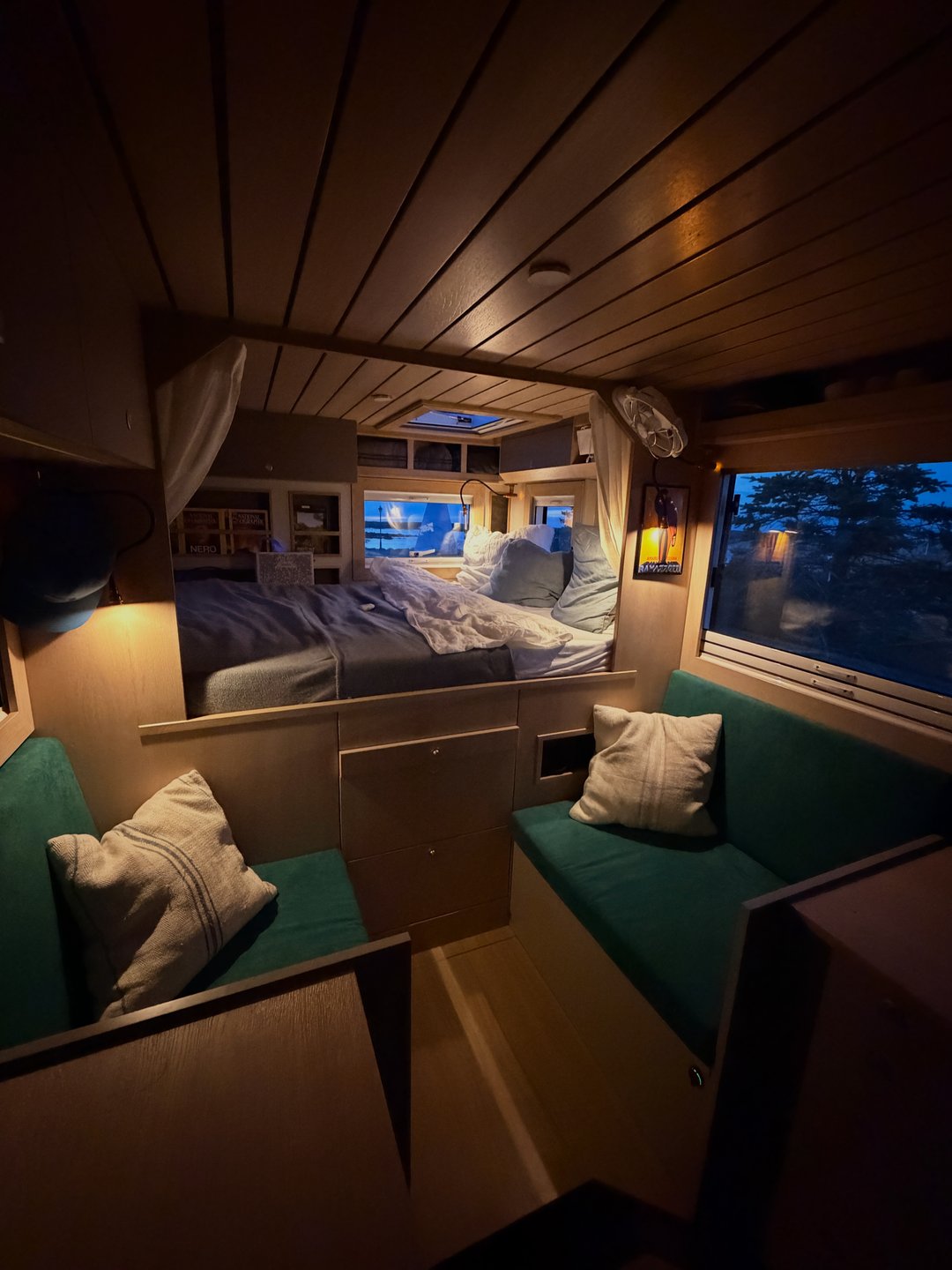
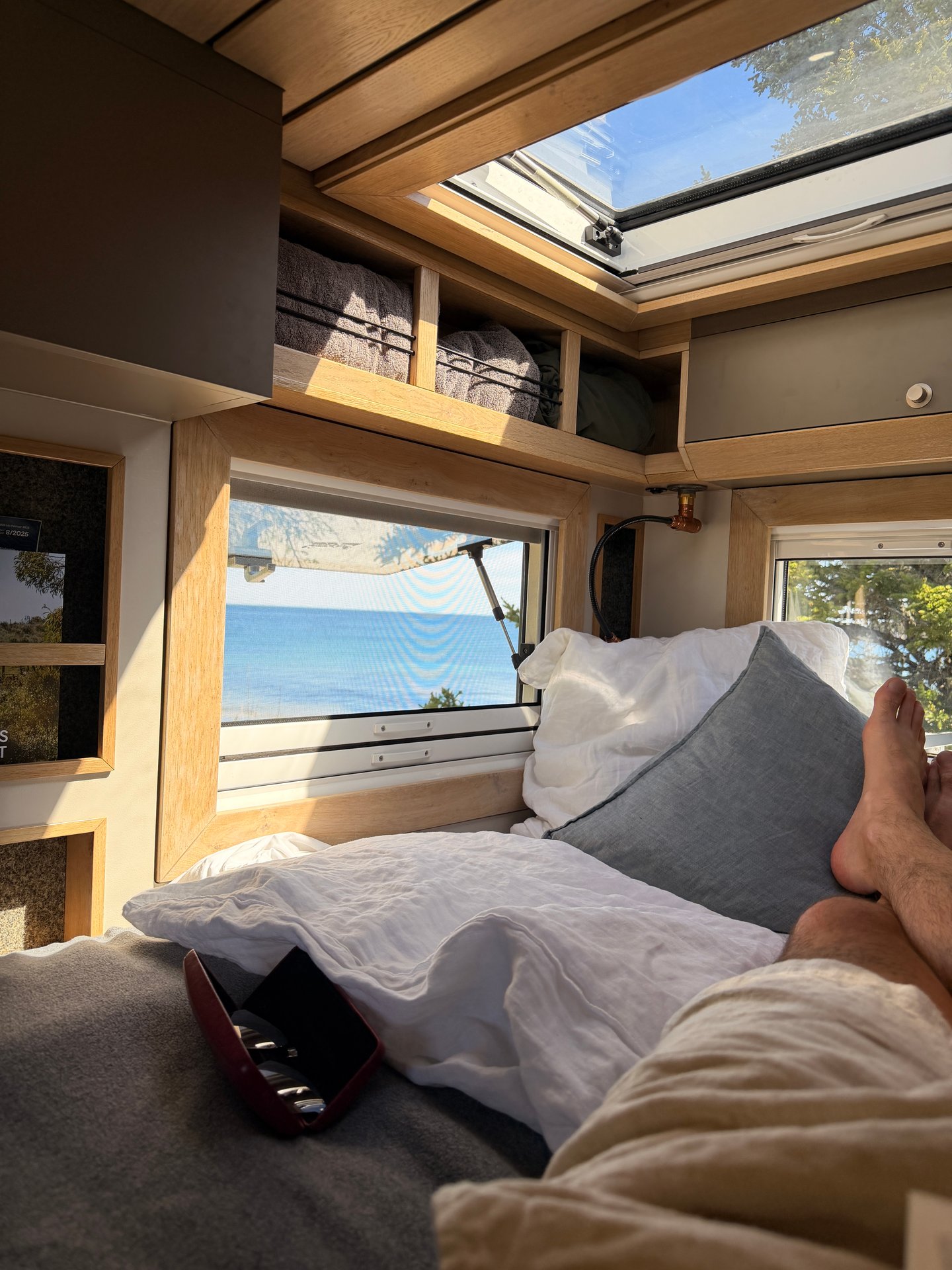
Ich wollte es einfach so wohnlich und gemütlich wie möglich im Fahrzeug haben. Was ich bei den meisten Expeditionsfahrzeugen überhaupt nicht mag, sind diese GFK-Kabinen, die von innen aussehen, als würde man beim Zahnarzt sitzen. Da ist alles mit weissem, kaltem, plastikähnlichem GFK ausgekleidet. Davon wollte ich in meinem Fahrzeug nichts sehen. Deswegen ist alles mit leichtem Queenply-Holz gebaut und verkleidet.
Wenn man externe Hilfe braucht
Irgendwann kam das Projekt immer mehr ins Stocken. Ich habe eine Stunde von der Werkstatt gewohnt und konnte nur am Wochenende am Fahrzeug arbeiten. Mein Bruder hat zudem Familie und konnte mich nur jeden zweiten Samstag unterstützen. Wir kamen irgendwann einfach nicht mehr voran. Da waren schon gute fünf Jahre vergangen. Und das Fahrzeug war im Grunde noch ein Rohbau. Es waren zwar schon 90% zugeschnitten, belegt, furniert. Aber wir haben neben dem Leben einfach kaum Zeit gefunden, auch noch am LKW zu arbeiten. Also habe ich mich dann irgendwann schweren Herzens dazu entschlossen, Felice an einen externen Ausbauer abzugeben, der das Fahrzeug für mich fertigbaut. Es war nicht einfach, jemanden zu finden, der so ein halbfertiges Projekt übernimmt. Die Suche hat einige Zeit in Anspruch genommen. Und dann musste ich wegen voller Auftragsbücher wieder über ein Jahr warten, bis man sich Felice annehmen konnte.
Der Traum wird Realität
Nach all den Jahren habe ich irgendwann nicht mehr daran geglaubt, dass das Fahrzeug tatsächlich fertig wird und ich damit reisen werde. Ehrlich gesagt konnte ich es die letzten drei Jahre des Ausbaus nicht mehr sehen und war fest entschlossen, es direkt zu verkaufen, sobald es fertig wird. Der Traum, die Welt zu bereisen, der 2018 geboren wurde, ist über die Jahre zu einem emotionalen und finanziellen Alptraum mutiert. Das Fahrzeug hat mich sehr viel gekostet. Inklusive einer Liebesbeziehung. Ich wollte es einfach nur noch loswerden. Doch nach und nach hat Felice ihr finales Gesicht erhalten. Und als der Umbau auf die Zielgerade einbog, habe ich mich wieder in die Idee verliebt, doch auf Weltreise zu gehen. Und so schreibe ich diese Zeilen gerade aus Kanada. Hier bin ich seit einer Woche. Ich habe meinen Job gekündigt, meine Wohnung untervermietet und Felice von Hamburg nach Kanada verschifft. Und nun stehe ich an einer wunderschönen Küste in Nova Scotia. Das Abenteuer beginnt. Und ich kann kaum glauben, dass ich das wirklich noch erlebe. Doch wie heisst es so schön: nach Regen kommt Sonne. Ich hatte die letzten Jahre genug Regen. Jetzt habe ich Lust auf Sonnenbrand. Ganz fiesen, knallroten Sonnenbrand.
Häufige Fragen zum Mercedes 814 DA Umbau
Wie lange dauert der Umbau eines Mercedes 814 DA zum Wohnmobil? Mein Umbau hat sechs Jahre und acht Monate gedauert, geplant waren zwei bis drei Jahre. Das geht natürlich deutlich schneller. Wenn das Fahrzeug in unmittelbarer Nähe zum Wohnort steht und man mehrfach die Woche daran arbeiten kann, dann kann man so ein Projekt auch in 1-2 Jahren fertigstellen.
Welcher Motor ist im Mercedes 814 DA verbaut? Der OM 364 LA. Ein Vierzylinder-Reihenmotor mit mechanischer Einspritzung, kein AdBlue, kein Partikelfilter. Genau das, was du für Reisen in Ländern mit schlechter Diesel-Qualität brauchst. Vom Werk aus hatte das Fahrzeug 140PS. Nach der Revidierung der Dieseleinspritzpumpe kommt es auf 170PS.
Ist ein altes Feuerwehrfahrzeug eine gute Basis für ein Expeditionsmobil? Ja. Drei Gründe: extrem niedrige Laufleistung (mein 814 DA hatte 9.800 km nach 30 Jahren), pflegliche Wartung durch die Feuerwehr und meist rostfreier Zustand. Plus die robuste Grundtechnik ohne moderne Elektronik.
Kann man einen Mercedes 814 DA selbst zum Wohnmobil ausbauen? Ja, aber plane realistisch. Du brauchst eine richtige Werkstatt, Werkzeug, Zeit und idealerweise eine zweite Person mit handwerklichem Background. Für besonders aufwendige Gewerke lohnt sich externe Hilfe.
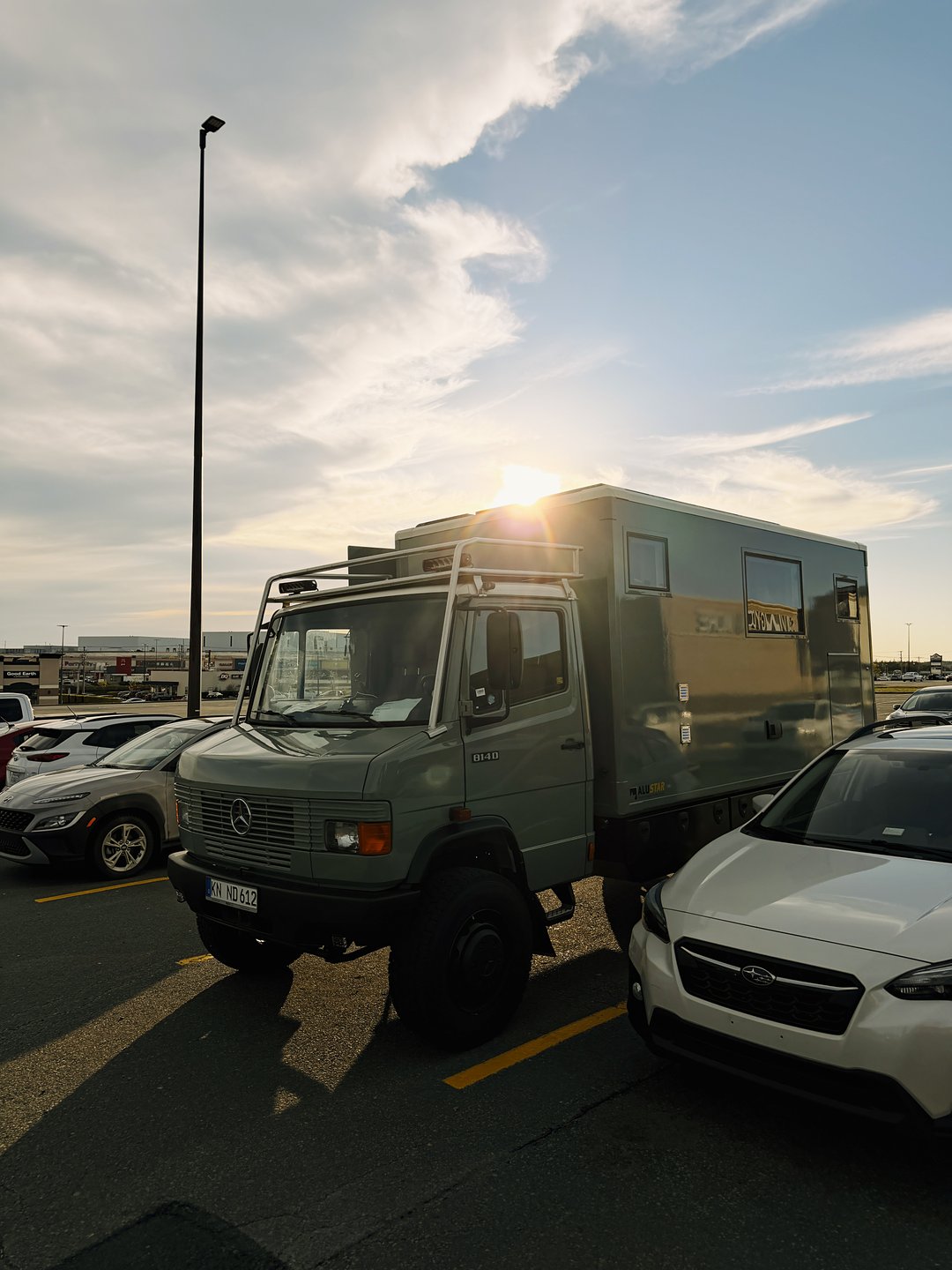
Six years and eight months. That’s how long it took between buying my Mercedes 814 DA and my first drive through Canada. Converting the Swiss fire truck into an expedition vehicle cost me every last bit of naivety I had, and then some. In 2018, I’d just gotten back from a six-month backpacking trip through South America. Smitten by the beauty of this world, I knew the moment I got home that this trip could only have been the beginning. So I went and bought an old Swiss fire truck from 1994. The goal: drive the Pan-American Highway from Canada to Patagonia in 2 to 3 years. Of course.
Why a Fire Truck as the Base for an Expedition Vehicle
Choosing a classic might not make much sense at first glance, given all the great modern vehicles out there like the Sprinter, Iveco or MAN. They’re far more economical, quicker on the road, more comfortable and a lot safer. But these days they’re also rolling computer systems, packed to the brim with electronics, driver aids and software. That can be a real problem when you’re traveling in far-flung countries with limited workshop infrastructure. If you break down in a vehicle like that, usually the only person who can help you is an IT specialist.
The Mercedes 814 DA has none of those fancy gimmicks. It’s the last “small truck” Mercedes made that has no electronics whatsoever. Sure, it’s loud, slow and not exactly thrifty when it comes to fuel. But it’s built like a tank and is far easier to repair. In many countries around this world (at least the places I want to go), there are still a lot more old vehicles on the road than new ones. Which means the mechanics there have more experience with “simple” vehicles than with the latest models.
Why Former Fire Trucks Are Ideal
Fire trucks have a second advantage too. As a rule they’re meticulously maintained and have very few miles on the clock. My 814 DA, named “Felice,” had just 9,800 km on it when I bought it. And that was after nearly 30 years at the time. I’ve probably walked more in that period than Felice ever drove.
The Most Important Decisions in the 814 DA Conversion
The subframe mounting. The aluminum living cabin has to be able to flex and twist against the cab, otherwise the frame or the cabin can crack. My cabin has a three-point mounting, which has worked well so far.
The insulation. Depending on where you want to travel, the thickness of the insulation matters. In my case the rule was: better too thick than too thin. I need an all-rounder. One that can handle both cold and heat. Patagonia gets cold. Mexico gets hot. The four-wheel-drive camper has to handle both.
The water tanks. Big enough for two weeks off-grid. When you’re parked at a beautiful bay, far from any sign of civilization, the last thing you want is to have to leave after two days because the water’s run out. I’ve got around 230 liters of fresh water on board and an 80-liter gray water tank. My water filtration system consists of two carbon filters and two ceramic filters from Famous Water. With that I can conjure drinking water out of just about any puddle. Delicious aftertaste included.
Plenty of power. Gas always gave me the creeps. On top of that, I have no desire to wrestle with gas bottles and the countless connector standards around this world. So I cook in the cabin with electricity (induction). That naturally draws a fair bit of power, which makes a big electrical system a must. Here’s my system at a glance:
- Onboard electrics: 24V (with a 12V converter for small loads)
- Inverter: 230V / 3 kW for the induction
- Solar: 6 panels, 960 Wp total (2x in series)
- Battery: 400 Ah lithium-ion
- Alternator: 100A, charges on top of that while driving
Work on the vehicle itself. Relatively little was actually optimized on the truck itself. The old fire truck is in outstanding condition. No rust at all, beautifully looked after by the Swiss fire brigade. When I had to take it in for its first roadworthiness inspection after nearly seven years off the road, the now 33-year-old Mercedes 814 DA passed straight away, without a single complaint. Things I optimized of my own accord included the diesel pump. It was completely overhauled and re-tuned by a Bosch pump specialist. That brought a hefty 30 hp extra. I’ve also fitted modern Marquardt shock absorbers. The truck now sits much tighter on the road and no longer wobbles in the wind. The original Mercedes wheels were swapped for 19.5-inch Gabo wheels.
Almost Seven Years of Conversion in Detail
Every Detail Has Infinite Depth
The most important thing I learned on this project: budget twice as much time as you think. Really. Every detail has infinite depth. You want a power socket on the wall. Lovely. Then you need a cable, a circuit breaker, an inverter, a battery, a charge controller, a solar panel on the roof, and so on. Every step drags ten new ones along with it. And of course every single component comes from countless manufacturers, all of whom have the best product. Cutting through all that is pretty complex. Especially if you’re a tech nerd like me and have to understand everything. The research and design of the vehicle and the interior alone ate up an endless amount of time. The upside is that it makes you get to know your vehicle from the ground up. Every connection, every line, every corner of the build. That’s worth its weight in gold when something jams at the end of the world. At least, that’s what I’m hoping.
How Three Years Turned Into Six
The fact that the whole thing ended up taking forever was above all down to my boundless naivety. I knew I’d underestimate the project. But I had no idea how badly. Back then I had neither a technical nor a hands-on background, and when I bought the fire truck I didn’t even have anywhere to park it. So I bought a fire truck without knowing where to put it. My eyes were bigger than my stomach. I also had to learn that you can’t just casually go and buy a living cabin complete with subframe. So for the first two years the vehicle just sat around. First at the seller’s (I still had no parking spot) and then at the cabin manufacturer’s. Their order books were chock-full, which meant I had to wait 10 months for the cabin and the subframe. During that period, demand for campers was simply huge.
Building the Interior With My Brother
For the next 2.5 years I then worked on the truck together with my brother, who’s a carpenter. I designed the entire interior layout, bought all the wood, the windows and doors and every technical appliance. I built the electrical system myself (which I’m still proud of today) and the whole water filtration system too, including the boiler and heating (Truma). Together my brother and I then painstakingly coated all the plywood panels with resin and cut them to size for the cabinetry. For all the other surfaces, like the floor, the ceiling, the walls, window frames and so on, I went with stained oak. Which means we veneered an awful lot of wood with oak together. I then stained it twice and oiled it once, which gave the oak that lovely pale look. The whole thing was a very long and exhausting process. Simply because it was so much wood and we didn’t even have a proper workshop.
I just wanted the interior to be as homey and cozy as possible. What I really don’t like about most expedition vehicles are those fiberglass cabins that look from the inside like you’re sitting at the dentist’s. Everything’s lined with white, cold, plasticky fiberglass. I didn’t want to see any of that in my vehicle. That’s why everything is built and clad with lightweight Queenply wood.
When You Need Outside Help
At some point the project stalled more and more. I lived an hour from the workshop and could only work on the vehicle at the weekend. My brother also has a family and could only help me every other Saturday. At some point we simply stopped making progress. A good five years had already gone by. And the vehicle was basically still a shell. Sure, 90% had been cut, coated and veneered. But on top of life itself, we just barely found the time to also work on the truck. So at some point, with a heavy heart, I decided to hand Felice over to an outside fitter to finish the build for me. It wasn’t easy to find someone willing to take on such a half-finished project. The search took quite a while. And then, thanks to full order books, I had to wait over a year again before anyone could take Felice on.
The Dream Becomes Reality
After all those years, at some point I stopped believing the vehicle would actually get finished and that I’d ever travel in it. Honestly, for the last three years of the build I couldn’t stand the sight of it and was dead set on selling it the moment it was done. The dream of traveling the world, born in 2018, had over the years mutated into an emotional and financial nightmare. The vehicle cost me a great deal. Including a relationship. I just wanted to be rid of it. But bit by bit, Felice took on her final shape. And as the conversion rounded the final stretch, I fell back in love with the idea of setting off to see the world after all. And so I’m writing these lines from Canada right now. I’ve been here a week. I quit my job, sublet my apartment and shipped Felice from Hamburg to Canada. And now I’m standing on a gorgeous coastline in Nova Scotia. The adventure is beginning. And I can hardly believe I’m actually getting to experience this. But as the saying goes: after rain comes sunshine. I’ve had enough rain these past few years. Now I’m in the mood for a sunburn. A really nasty, bright-red sunburn.
Frequently Asked Questions About the Mercedes 814 DA Conversion
How long does it take to convert a Mercedes 814 DA into a camper? My conversion took six years and eight months; the plan was two to three years. It can obviously go much faster. If the vehicle is right near where you live and you can work on it several times a week, you can finish a project like this in 1 to 2 years.
Which engine is in the Mercedes 814 DA? The OM 364 LA. An inline four-cylinder with mechanical injection, no AdBlue, no particulate filter. Exactly what you need for traveling in countries with poor diesel quality. From the factory the vehicle had 140 hp. After overhauling the diesel injection pump, it’s up to 170 hp.
Is an old fire truck a good base for an expedition vehicle? Yes. Three reasons: extremely low mileage (my 814 DA had 9,800 km after 30 years), careful maintenance by the fire brigade, and a mostly rust-free condition. Plus the rugged, basic mechanics with no modern electronics.
Can you convert a Mercedes 814 DA into a camper yourself? Yes, but plan realistically. You need a proper workshop, tools, time and ideally a second person with a hands-on background. For particularly demanding trades, outside help pays off.